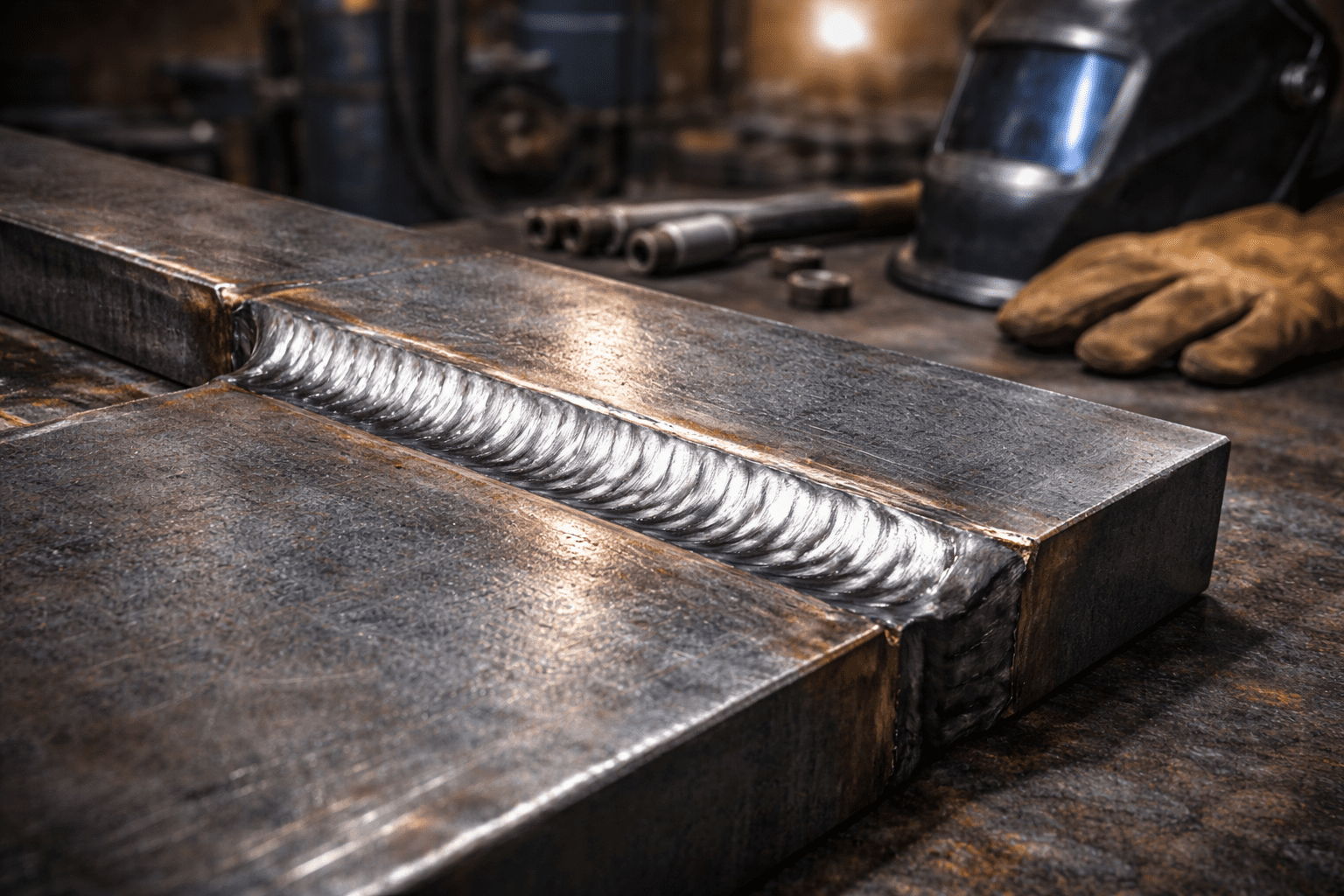
Most seam failures start before the arc is even struck
If you want a seam that holds up, prep is not optional. A lot of failed repairs we see around Edmonton were not doomed because someone ‘cannot weld’. They failed because someone welded over paint, rust, oil, or a sloppy gap and expected the bead to magically become structural.
Mobile welding happens on real equipment in real conditions, often outside. That makes seam prep even more important because wind, moisture, and inconsistent surfaces are already working against you. Good prep turns a risky repair into a reliable seam.
Seam prep steps that actually matter
1) Remove paint, rust, and mill scale
Coatings and corrosion create contamination. At best you get spatter and a rough bead. At worst you get porosity and lack of fusion inside the seam. Grind to clean bare metal where the weld will land and where heat needs to soak into the joint.
2) Deal with oil and grease
Oil vaporizes and creates porosity fast. This is common on trailer repairs, equipment mounts, and anything exposed to hydraulic fluid or road grime. If the joint is oily, it needs more than a quick wire brush.
3) Fit-up: tight contact beats ‘bridge the gap’
A seam bridging a big gap is a seam with problems. Gaps cause burn-through on thin material and weak fusion on thick material. Good fit-up means parts are aligned, supported, and held in place so the seam fuses the joint instead of acting like filler.
4) Bevel thick material when required
On thicker steel, you often need a bevel or groove prep to reach the root and build real penetration. Without it, the seam can look good on the surface while the root is weak. That is how you get cracks that return in the same place.
5) Tack and check alignment
Tacks prevent parts from moving as heat is applied. Especially on longer seams like frames, gates, and fabricated pieces, tacking and checking alignment prevents twist and distortion that can stress the seam later.
Clean metal and fit-up are not ‘extra steps’. They are the difference between a seam that holds and a seam that fails.
Real Edmonton scenarios where prep makes the difference
Trailer repairs after winter
Salt and moisture get into seams and under paint. If you weld over that, you trap corrosion in the joint and it comes back quickly. Grinding back to solid metal is the only way to build a seam that lasts through another season.
Acreage equipment and outdoor steel
Outdoor equipment often has layered contamination: dirt, grease, old paint, and sometimes cracked welds that were patched before. Proper seam prep means removing the old crack, cleaning to solid metal, and rebuilding the joint with correct fusion and reinforcement if needed.
Fabrication and add-ons
Adding tabs, racks, or brackets to existing steel requires clean contact surfaces. If the bracket does not sit flat, the seam gets stressed unevenly and may crack. Prep includes getting the parts to fit like they belong together.
Simple prep checklist before you weld or hire a welder
- Is the metal clean and bright where the seam will be welded?
- Do the parts fit tight without forcing?
- Is the joint type correct for the load (fillet vs groove)?
- Is wind and moisture controlled for gas-shielded work?
- Is the weld area accessible enough to get correct angle and tie-in?
Need mobile welding with proper seam prep?
YEGWELD provides mobile welding and fabrication across Edmonton and a 100 km radius. We handle repairs and fabrication using MIG, TIG, and stick welding. We do not cut corners on prep because prep is how seams last in real Alberta conditions.
Call 780-233-8285 or reach out through our contact page. Cash and e-Transfer accepted. 24/7 emergency availability.
This article is for informational purposes only and may contain inaccuracies. Always consult a certified welding professional before starting any project.
NEED WELDING IN EDMONTON?
Text us photos for a fast estimate. We come to you.