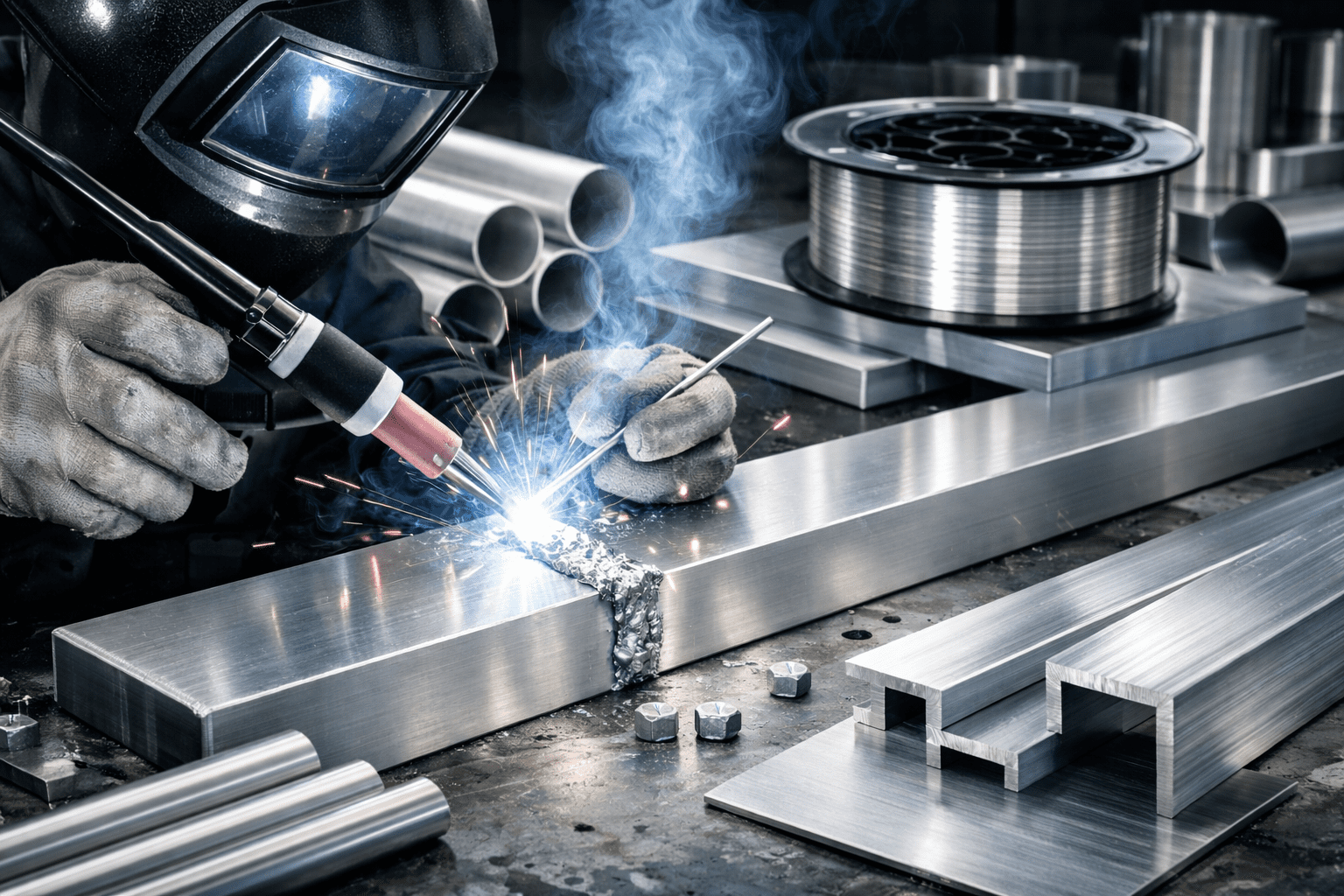
Aluminum Welding: Methods, Techniques, and Best Practices for Strong Welds
Aluminum welding is widely used in construction, automotive repair, fabrication, and industrial projects due to aluminum’s lightweight structure, corrosion resistance, and strength. However, welding aluminum requires specific techniques and equipment because the material behaves very differently from steel.
This guide explains how to weld aluminum properly, what welding methods are used, and which equipment delivers the best results.
Why Aluminum Is Difficult to Weld
Aluminum presents several challenges during welding:
- High thermal conductivity — heat spreads quickly, making temperature control difficult
- Low melting point — aluminum melts at about 660°C (1220°F)
- Oxide layer — aluminum forms an oxide coating that melts at much higher temperatures (~2000°C / 3630°F)
- High fluidity — molten aluminum flows easily and can cause burn-through
Without proper preparation and technique, welds may develop porosity, cracking, or weak structural integrity.
Proper Aluminum Preparation Before Welding
Preparation is critical for achieving clean, strong welds.
Surface Cleaning
Remove all contaminants before welding:
- Oil and grease
- Dirt and moisture
- Oxidation layer
Recommended tools:
- Acetone or aluminum-safe degreaser
- Dedicated stainless steel wire brush (never used on steel)
Joint Preparation
Depending on material thickness:
- Thin material: tight fit-up with minimal gap
- Thick aluminum: bevel edges to ensure full penetration
- Clamp parts securely to prevent distortion
Main Aluminum Welding Methods
TIG Welding (GTAW) — Best for Precision
TIG welding is considered the highest-quality method for aluminum.
Advantages:
- Extremely clean welds
- Excellent control
- Ideal for thin materials and visible welds
Typical applications:
- Automotive parts
- Aluminum railings
- Decorative fabrication
- Food-grade equipment
Equipment required:
- AC TIG welder
- Pure argon shielding gas
- Tungsten electrode
- Aluminum filler rod (4043 or 5356)
MIG Welding (GMAW) — Best for Speed
MIG welding is commonly used for thicker aluminum and production work.
Advantages:
- Faster welding speed
- Easier learning curve
- Suitable for structural jobs
Requirements:
- Spool gun or push-pull system
- 100% argon shielding gas
- Aluminum MIG wire
Common uses:
- Trailer repair
- Structural frames
- Marine components
- On-site aluminum welding
Stick Welding (SMAW) — Limited Use
Stick welding aluminum is possible but rarely recommended.
Disadvantages:
- Lower weld quality
- Difficult arc control
- More cleanup required
It is mainly used for emergency repairs when TIG or MIG equipment is unavailable.
Laser and Friction Welding (Industrial Methods)
Advanced industries may use:
- Laser welding — precise automated production
- Friction stir welding — extremely strong joints used in aerospace and transportation
These methods are typically not used in field welding.
Shielding Gas for Aluminum Welding
The most common shielding gas is:
- 100% Argon — standard for TIG and MIG aluminum welding
For thicker materials, argon/helium mixes may improve penetration and heat input.
Common Aluminum Welding Mistakes
Avoid these frequent problems:
- Welding without proper cleaning
- Using incorrect polarity (TIG must use AC)
- Excessive heat causing burn-through
- Poor wire feeding during MIG welding
- Using steel-contaminated tools
Professional Tips for Better Aluminum Welds
- Preheat thick aluminum (120–150°C / 250–300°F)
- Maintain short arc length
- Use steady travel speed
- Control heat instead of increasing amperage
- Always test settings on scrap material first
When to Hire a Professional Aluminum Welder
Aluminum welding requires experience and specialized equipment. For structural repairs, mobile welding, or on-site fabrication, hiring a professional ensures:
- Strong, defect-free welds
- Proper material selection
- Compliance with safety standards
Conclusion
Aluminum welding demands more precision than steel welding, but with proper preparation, correct equipment, and the right method — TIG for precision or MIG for speed — it is possible to achieve durable, high-quality results.
Understanding aluminum’s unique properties and choosing the correct welding technique is the key to long-lasting and safe welded structures.
This article is for informational purposes only and may contain inaccuracies. Always consult a certified welding professional before starting any project.
NEED WELDING IN EDMONTON?
Text us photos for a fast estimate. We come to you.