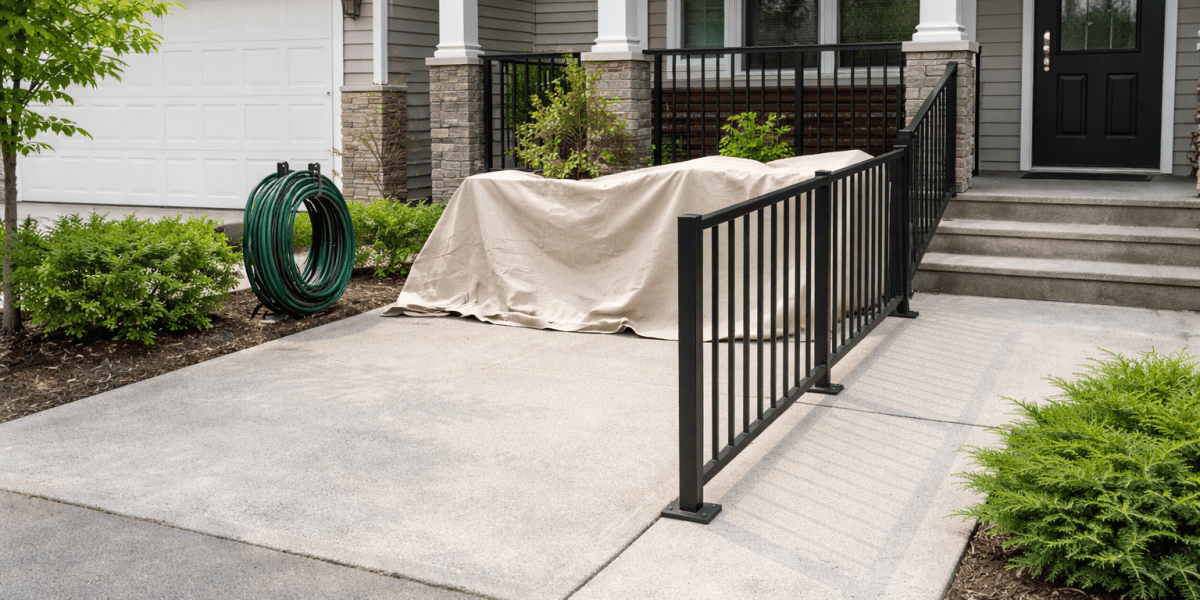
When you hire a mobile welder, you’re paying from the moment the work starts — not from the moment the truck parks. But here’s what a lot of people don’t realize: how prepared your site is directly affects how long the job takes. A well-prepped work area can easily save you 30 to 60 minutes of billable time. A poorly prepped one can add an hour or more.
We’re not expecting you to set up a fabrication shop in your driveway. But a few simple steps before we arrive make everything faster, safer, and cheaper. Here’s the checklist we wish every customer knew about.
1. Clear the Work Area
We need room to work — and welding throws sparks, UV light, and heat in every direction. Before your welder arrives:
- Move vehicles at least 3 metres (10 feet) away from the work area. Welding sparks will pit paint and crack windshields.
- Clear furniture, planters, and decorations from the immediate area. Anything within about 2 metres of the weld should be moved or covered.
- Sweep the area — dry leaves, sawdust, cardboard, and other combustibles near a welding arc are a fire hazard. This isn’t theoretical; we’ve seen it happen.
- Make sure we can actually reach the work. A railing buried behind three garbage cans and a snowbank takes time to access. That’s time on the clock.
2. Identify and Protect Flammables
Welding sparks can travel 10 metres (about 35 feet) and stay hot enough to ignite materials when they land. Take a quick look around:
- Gas cans, propane tanks, solvents, paint — move them well away or into a closed garage
- Dry grass or mulch beds near the work area — wet them down with a hose before we start
- Wooden decks, siding, or fences adjacent to the weld — we’ll use fire blankets, but having a garden hose charged and ready is smart backup
We carry fire extinguishers and welding blankets on every job. But the fewer hazards in the area, the faster we can work without stopping to reposition fire protection.
3. Know What You Want (or At Least What’s Wrong)
This sounds obvious, but it saves a surprising amount of time. Before we arrive, think about:
- What’s the problem? “The railing is wobbly” is a good start. “The second post from the top on the left side has a cracked weld at the base” is even better.
- What’s the desired outcome? Do you want it repaired to functional condition, or do you want it to look like new? Those can be different levels of work.
- Are there other issues while we’re here? If you’ve got a broken gate hinge too, mention it when you book. It’s much cheaper to handle two small jobs in one visit than to book two separate trips.
Photos Help Enormously
When you call or message for a quote, send photos. Close-ups of the damage, a wide shot showing the full piece, and any detail shots of rust, cracks, or broken joints. Good photos let us show up with the right materials and the right process — instead of discovering on-site that we need a different electrode or a piece of stock we didn’t bring.
4. Provide Access and Power (If Possible)
We carry a generator, so electrical power isn’t strictly required. But if you have a standard 120V outdoor outlet available, it can be helpful for running grinders and lights — and it’s quieter than a generator for your neighbours.
For access:
- Make sure gates are unlocked
- If the job is in a backyard, make sure the path is clear for carrying equipment
- If it’s a commercial property, let your building manager know a welder is coming — we sometimes get stopped by security
- In winter, clear snow and ice from the work area and the path to it. Carrying a 30 kg welder across a skating rink is nobody’s idea of fun.
5. Plan for Pets and Kids
Welding arcs produce intense UV light that can burn eyes (arc eye) in seconds — even from a distance. The sparks are hot enough to burn skin and ignite clothing. Please:
- Keep children inside and away from windows facing the work area
- Keep dogs secured — we’ve had dogs try to investigate (and bite) welding cables
- Let your neighbours know if the work is near a property line, so they can keep their kids and pets away too
6. Be Available (But You Don’t Need to Watch)
We’ll need you (or someone authorized) available for the first few minutes to confirm the scope of work, and at the end to inspect the finished job. In between, you don’t need to stand there. Go inside, go to work, do your thing. We’ll knock on the door when it’s done or if we have a question.
Leave a phone number where you can be reached in case we need a decision — “the post is more corroded than we thought, do you want us to replace the whole section or just patch it?”
The Bottom Line
A prepared site means we spend our time welding, not clearing obstacles, hunting for the work area, or managing fire hazards. That translates directly to a lower bill for you and a better result overall.
Ready to book? Send us your photos and details or call 780-233-8285. We’ll give you a quote and get it scheduled.
This article is for informational purposes only and may contain inaccuracies. Always consult a certified welding professional before starting any project.
NEED WELDING IN EDMONTON?
Text us photos for a fast estimate. We come to you.