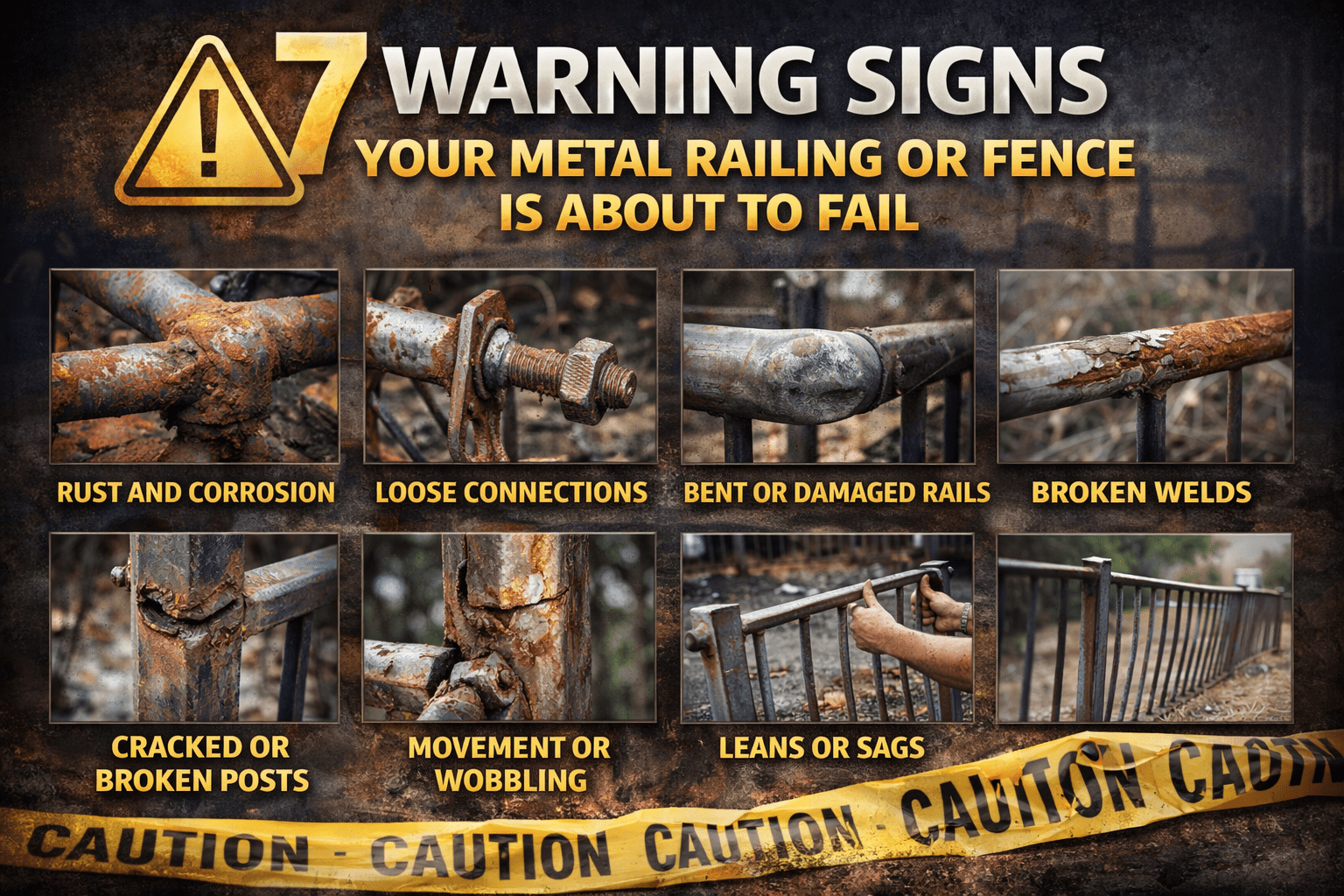
Metal railings and fences are built to last decades, but “built to last” and “will last forever without maintenance” are two very different things. Edmonton’s freeze-thaw cycles, road salt, and long winters are brutal on steel and iron. Every spring, we get calls from homeowners and business owners who suddenly notice their railing is wobbling — and they’re wondering if it’s been like that all winter.
Here are seven signs that your metal railing or fence needs professional attention before it becomes a safety hazard or a much more expensive replacement job.
1. Rust at the Base (Where Metal Meets Concrete)
This is the most common failure point we see in Edmonton. Where a railing post enters concrete or sits on a step, water pools, salt accumulates, and rust takes hold. Surface rust is cosmetic. But when you see flaking, pitting, or metal that’s visibly thinner at the base, the post is losing structural strength.
Catch it early and we can cut out the corroded section and weld in new material. Wait too long and the whole post needs replacing — which means drilling into your concrete.
2. Wobble or Movement When You Push
Grab your railing and give it a firm push. If it moves more than a couple of millimetres, something has failed — either the weld joints, the anchor bolts, or the post itself has corroded below the surface. A railing that wobbles under hand pressure will not stop a person who stumbles.
Quick Test
Stand at the top of your stairs, grip the railing, and apply your body weight sideways. If it flexes noticeably, it needs repair. This is especially critical for commercial properties where building code compliance is mandatory.
3. Cracked or Broken Welds
Look closely at the joints where horizontal bars meet vertical posts. Cracked welds show as hairline fractures, sometimes with rust staining along the crack. Broken welds are obvious — the joint has separated and parts are moving independently.
Cracked welds don’t fix themselves. Temperature cycling (Edmonton swings from -30°C to +30°C through the year) works those cracks open a little more every season. A simple re-weld now prevents a full rebuild later.
4. Missing or Bent Pickets and Spindles
Beyond looking rough, missing spindles are a code violation if the gap exceeds 4 inches (100 mm). Kids and pets can fit through larger gaps. Bent pickets usually mean an impact — a vehicle bump, a heavy object falling against the fence, or someone leaning hard on a section that wasn’t designed for it.
We can straighten or replace individual pickets on-site with mobile welding. No need to remove the entire section.
5. Rust Bubbling Under Paint
If you see paint bubbling, blistering, or flaking off in patches, rust is developing underneath. The paint was the only thing protecting that steel from moisture, and once it fails, corrosion accelerates fast. Edmonton’s winter road salt spray makes this worse, especially on railings near driveways and sidewalks.
The fix: grind off the failed paint, treat the rust, repair any weakened areas with welding if needed, and repaint with a proper primer and topcoat. We handle the welding and metal prep — you or a painter can handle the finish coat.
6. Leaning Fence Posts
A fence post that’s leaning has either lost its footing (the concrete base has cracked or heaved) or the post has corroded at ground level. In Edmonton, frost heave is a major culprit — our clay-heavy soils move a lot during freeze-thaw cycles, and fence posts take the brunt of it.
If the post is still structurally sound, we can sometimes brace and re-anchor it. If it’s corroded, we cut it above grade and weld a new section onto a fresh footing.
7. The Railing Is Older Than 20 Years and Has Never Been Serviced
If your railing was installed in the early 2000s or before — and nobody has ever inspected, repainted, or repaired it — it’s overdue for a professional look. That doesn’t mean it’s failing, but a 20-minute inspection can catch problems that cost $200 to fix now versus $2,000 to fix next year.
Why This Matters More Than You Think
A failed railing isn’t just ugly — it’s a liability. If someone falls because your railing gave way, you’re looking at potential injury claims, insurance headaches, and municipal code violations. Commercial property owners in Edmonton are especially exposed here; the city’s safety codes are clear about handrail requirements.
What a Repair Typically Looks Like
Most railing and fence repairs are straightforward mobile welding jobs. We come to your property, assess the damage, and handle the repair on-site in a few hours. Common repairs include:
- Re-welding cracked or broken joints
- Cutting out rusted sections and welding in new steel
- Straightening or replacing bent pickets
- Re-anchoring loose posts
- Reinforcing weak sections with additional bracing
Spring is the busiest season for railing repairs in Edmonton — once the snow melts and people can actually see their metalwork again. If you want to beat the rush, book an inspection now and we’ll get your railings solid before the busy season hits.
This article is for informational purposes only and may contain inaccuracies. Always consult a certified welding professional before starting any project.
NEED WELDING IN EDMONTON?
Text us photos for a fast estimate. We come to you.