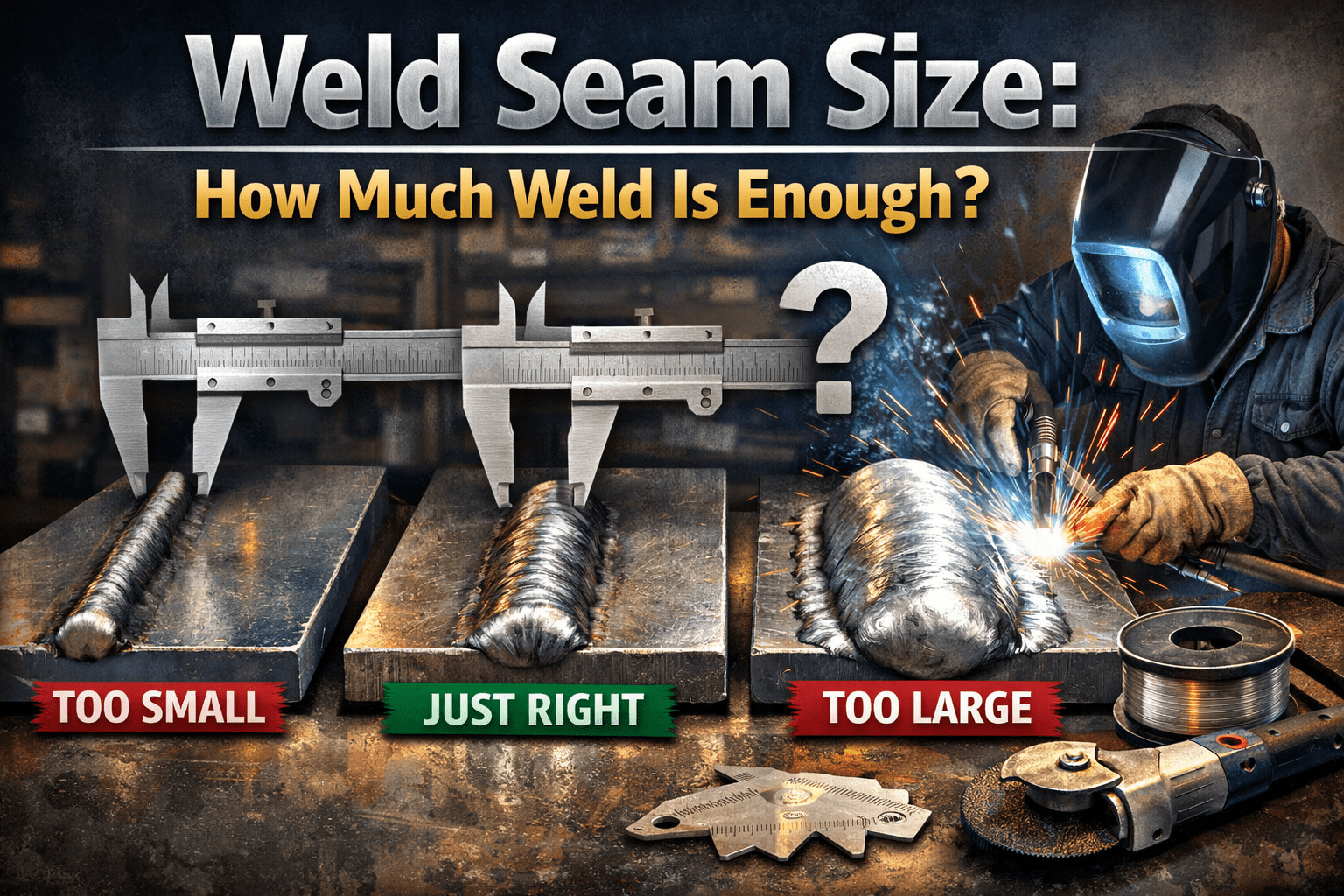
Seam size is a common reason repairs fail
One of the most common things we see on failed repairs is a seam that is simply too small for the job. The bead might look clean, but if the seam is undersized, it cracks. On the other side, people sometimes think bigger is always better and lay down oversized weld metal that warps the part, pulls alignment, or creates new stress points.
Seam size is about matching the weld to the load, the thickness, and the way the part will be used in the real world. A light bracket on thin steel needs a different approach than a suspension mount on a trailer frame.
What happens when the seam is too small
Cracks start at the toes
Small seams concentrate stress. The weld toe becomes a crack starter under vibration. This is common on hinges, tongue accessories, and equipment mounts where leverage is constant.
Base metal tears beside the weld
Sometimes the seam holds, but the base metal tears because the load is not distributed. That is a sign the joint design or reinforcement needs improvement, not just another pass on top.
Repair life is short
Undersized seams often survive a little while and then fail when conditions get rough: winter potholes, heavy loads, or repeated use. In Edmonton, that rough use is normal.
What happens when the seam is too big
Distortion and misalignment
Excess heat can warp thinner parts and pull joints out of alignment. That can create binding in hinges, uneven loading, and new stress points that lead to cracks.
More heat affected zone than needed
More weld metal usually means more heat input. That can change properties near the seam and increase the chance of cracking in certain conditions, especially if the part is already stressed.
Covering problems instead of fixing them
Oversized seams are sometimes used to compensate for poor prep, gaps, or wrong joint choice. That is not a reliable long-term strategy.
The best seam is not the biggest seam. It is the seam that matches the load and fuses correctly into clean metal.
Practical ways to think about seam sizing
Seam size and seam length work together
People focus on bead height, but seam length matters too. A longer seam can spread load better than a short, thick blob of weld. On brackets, longer seam length and correct placement often reduce stress more effectively than simply piling weld metal in one spot.
Match the seam to the thickness
Thin material needs controlled heat and correct seam size to avoid burn-through and warping. Thicker material may need beveling or multiple passes to ensure fusion where it matters. Seam size is not just a number. It is a plan that includes process choice and joint prep.
Match the seam to the load path
Where the force travels matters. A bracket loaded in shear needs seam length and placement that spreads that shear. A hinge plate loaded in bending needs reinforcement to reduce flex at the seam. If the part flexes, the seam suffers.
Consider vibration and fatigue
Trailers, racks, and equipment in Edmonton see vibration constantly. Fatigue loads punish small defects and undersized seams. If the seam is in a high-vibration zone, it needs to be built with that in mind, often with better prep and sometimes reinforcement.
Simple guidance by common job type
| Item | What matters most | Typical seam approach |
|---|---|---|
| Gate hinge plate | Leverage and flex | Correct seam placement, enough length, often a gusset |
| Trailer accessory mount | Vibration | Solid fusion, clean prep, support to reduce movement |
| Equipment bracket | Shock loads | Seam sized for impact, possible multi-pass and reinforcement |
| Thin sheet repair | Distortion control | Controlled heat, correct fit-up, avoid oversized bead |
When reinforcement beats a bigger seam
If a seam keeps cracking in the same spot, bigger bead is rarely the answer. A gusset, reinforcement plate, or improved joint design often solves the real problem by reducing flex and spreading load. The seam then lives an easier life.
Need a weld seam sized and built for real use?
YEGWELD provides mobile welding and fabrication across Edmonton and a 100 km radius. We build seams for real loads, real conditions, and real Alberta roads using MIG, TIG, and stick welding. If you are dealing with repeat seam failures, we can assess the joint and recommend the right fix.
Call 780-233-8285 or contact us here. Cash and e-Transfer accepted. 24/7 emergency availability.
This article is for informational purposes only and may contain inaccuracies. Always consult a certified welding professional before starting any project.
NEED WELDING IN EDMONTON?
Text us photos for a fast estimate. We come to you.